Rust on door hardware rarely appears overnight. It begins quietly around screw heads, hinge pins, latch edges, and worn protective coatings. Moisture settles there, especially after rain, coastal air, or repeated cleaning. Fingerprints can also leave salts behind. Small marks become rough orange patches.
So, how to prevent door hardware from rusting? The answer involves more than choosing stainless steel. Regular cleaning, thorough drying, suitable protective coatings, correct installation, and quick repairs all matter. A neglected hinge can stain a door within weeks. That detail is easy to miss.
Philip A. Schweitzer, a respected corrosion engineering author, defines the problem clearly: “Corrosion is the destructive attack of a metal by chemical or electrochemical reaction with its environment.” His statement explains why exposed hardware needs both protection and maintenance. Water is only part of the problem. Salt, pollution, trapped dirt, and incompatible metals can accelerate damage.
This guide presents seven practical ways to protect door hardware from rusting. They include selecting corrosion-resistant materials, removing moisture, applying safe lubricants, and inspecting vulnerable areas. The methods are useful for homes, offices, workshops, and exterior gates. However, no method is perfect. Even stainless steel can show discoloration when maintenance is ignored. That is the uncomfortable part. Prevention depends on small actions repeated over time, not one expensive purchase. A dry cloth, used after rain, may prevent more damage than expected.
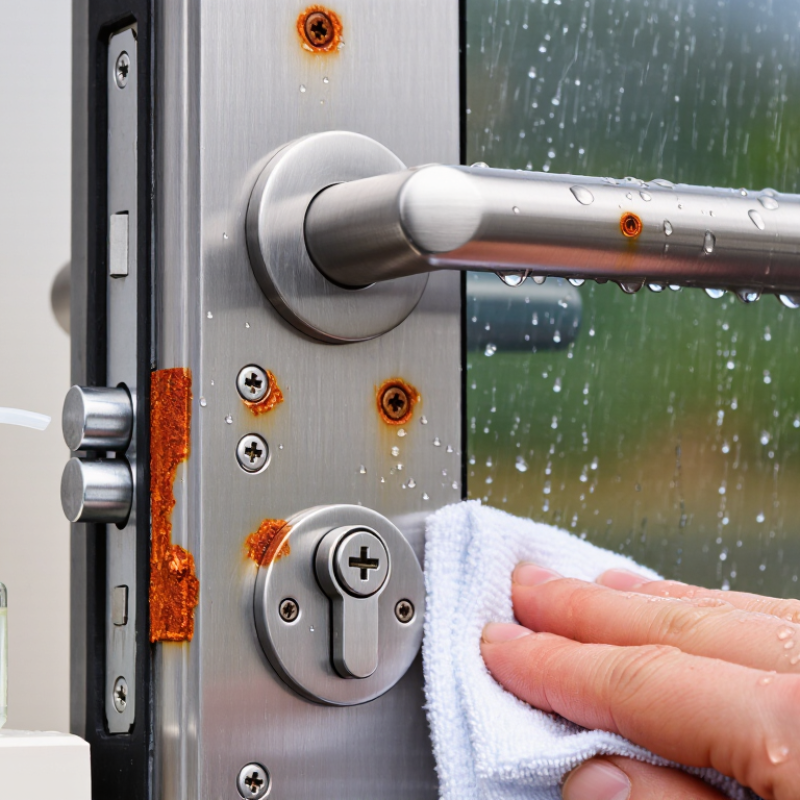
Door hardware rusts when moisture reaches unprotected metal and stays there. This often happens near bathrooms, kitchens, coastal windows, and unheated entryways. Humid air forms a thin water film on handles, hinges, screws, and lock plates. Dust and skin oils hold that film longer. Small scratches in the protective finish then become starting points for corrosion.
I once blamed poor metal quality after a hinge developed orange spots. The real cause was repeated condensation around a cold door. That mistake changed my inspection routine. Wipe damp hardware promptly, improve ventilation, and repair leaking seals. Dry the hinge joints before applying a light, suitable lubricant. Do not use excessive oil, because it attracts grit. Clean hardware with a soft cloth and mild soap. Harsh cleaners may remove the finish faster than rust can.
Different metals can also accelerate corrosion when they touch in a wet environment. This reaction is called galvanic corrosion. Check for dark stains, bubbling finishes, loose screws, and rough edges. Replace damaged fasteners with compatible, corrosion-resistant parts. Add a protective coating only after the surface is clean and completely dry. A covered entrance helps too. So does keeping sprinklers away from the door. I still find that regular inspections matter more than expensive products. Monthly checks may feel excessive, but rust usually becomes visible after the damage has started.
| Prevention Method | Why Door Hardware Rusts | How the Method Works | Best Applications | Recommended Practice | Important Precautions |
|---|---|---|---|---|---|
| 1. Choose Corrosion-Resistant Materials | Moisture and oxygen react with exposed iron or steel and form iron oxides, commonly known as rust. | Select hardware made from stainless steel, brass, bronze, aluminum, or other corrosion-resistant materials suited to the environment. | Exterior doors, coastal locations, bathrooms, basements, laundry rooms, and areas with frequent condensation. | Match the material to the exposure level before installation; salt air requires more corrosion resistance than a dry indoor environment. | Different metals can create galvanic corrosion when they remain in electrical contact in the presence of moisture. Use compatible fasteners and fittings. |
| 2. Apply a Protective Finish or Coating | Scratches, worn surfaces, and unprotected metal allow water and contaminants to reach the underlying metal. | Powder coating, plating, paint, or another durable finish creates a barrier between the metal, moisture, oxygen, and salts. | Door handles, hinges, escutcheons, kick plates, locks, and other hardware exposed to weather or heavy use. | Inspect the finish periodically and repair chips or exposed areas according to the coating manufacturer's instructions. | Do not use abrasive pads or harsh chemicals that can remove the finish. Coatings cannot protect metal where the barrier has been severely damaged. |
| 3. Keep Hardware Clean and Completely Dry | Dirt, salt, dust, and cleaning residue hold moisture against the surface and speed up corrosion. | Regular gentle cleaning removes corrosive deposits and reduces the time that water remains on the hardware. | All door hardware, especially exterior doors and doors near swimming pools, roads, or industrial areas. | Wipe surfaces with a soft cloth and mild soapy water when needed, rinse away residue, and dry thoroughly. | Avoid leaving water in joints, keyways, or screw recesses. Never mix cleaning chemicals, especially acids and chlorine-based products. |
| 4. Use a Suitable Protective Lubricant | Friction can wear protective finishes, while moisture trapped in hinges, latches, and moving parts promotes internal corrosion. | A lubricant designed for the specific component reduces friction and helps displace moisture from moving contact surfaces. | Hinges, latch mechanisms, pivot points, and other moving metal parts. | Apply a small amount when movement becomes stiff or during scheduled maintenance; remove excess lubricant after application. | Use only products suitable for the component. Avoid over-lubricating locks or applying oily products where they can attract dust and grit. |
| 5. Prevent Water Leaks and Condensation | Rainwater, plumbing leaks, poor seals, and indoor condensation provide the continuous moisture needed for corrosion. | Weatherstripping, door sweeps, flashing, drainage, and adequate ventilation keep water away from the hardware. | Exterior doors, unheated entryways, bathrooms, kitchens, garages, and humid storage areas. | Check seals and surrounding walls seasonally; correct leaks promptly and improve ventilation where condensation repeatedly forms. | Replacing rusty hardware without correcting the moisture source usually allows corrosion to return. |
| 6. Minimize Contact With Salt and Harsh Chemicals | Chloride salts and acidic or alkaline chemicals can damage protective films and accelerate electrochemical corrosion. | Removing salt deposits and preventing chemical splashes reduces the corrosive load on the hardware. | Coastal buildings, winter-salted entrances, swimming-pool areas, cleaning stations, and industrial facilities. | Rinse salt or chemical residue with clean water when appropriate, then dry the hardware completely. | Do not use acidic cleaners, bleach, or strong solvents unless the hardware instructions specifically permit them. |
| 7. Inspect, Repair, and Replace Early | Small scratches, loose screws, pitting, and early rust expose more metal and allow corrosion to spread beneath finishes. | Early maintenance removes corrosion sources and restores the protective barrier before structural or functional damage develops. | All hardware, with more frequent checks on exposed, high-use, or salt-air doors. | Inspect at least twice a year and after severe weather; tighten loose fasteners, remove light surface rust safely, and replace badly pitted parts. | Do not rely on paint alone over deep pitting, weakened fasteners, or hardware that no longer operates safely. |
| Key principle: Rust requires metal, moisture, and oxygen. The most reliable prevention strategy combines suitable materials, an intact protective finish, regular cleaning and drying, moisture control, and timely maintenance. | |||||
Rust begins when moisture stays on unprotected metal. Condensation, dust, and skin oils can trap a thin water film.
Check bathroom doors, kitchen doors, coastal windows, and unheated entrances. These areas often hold humid air.
Wipe damp hardware quickly. Improve ventilation and repair leaking seals. Keep sprinklers away from the doorway.
Inspect it every few months, especially after rainy weather. Monthly checks may feel excessive. Rust often appears after damage begins.
Look for orange dust, bubbling finishes, dark stains, rough edges, and loose screws. Grinding sounds can reveal hidden hinge corrosion.
Yes, if the metal remains solid. Remove loose rust with a wire brush or fine abrasive pad.
Clean away all dust and dry the metal completely. Apply a suitable rust-inhibiting primer and an exterior-grade coating.
Replace it when deep pits, swollen joints, stripped screws, or weak mounting points appear. Small flaws are easy to miss.
Apply only a light amount to dry hinge joints. Excess oil attracts grit and may stain painted surfaces.
Coating damp metal can cause early peeling. I once rushed the drying stage. The finish failed within weeks.
Preventing rust on door hardware begins with understanding its main causes, including moisture, condensation, salt in coastal air, poor ventilation, and damaged protective finishes. The best approach to how to prevent door hardware from rusting is to choose corrosion-resistant materials and durable protective coatings suited to the local environment. Stainless steel, brass, and properly finished metal can provide better long-term protection when selected carefully.
Regular maintenance is equally important. Clean door handles, hinges, locks, and other fittings with a mild cleaner, then dry them completely to prevent moisture from remaining in joints or recessed areas. Apply a suitable lubricant to moving parts and use a protective coating where appropriate, avoiding excess buildup that can attract dust. Inspect hardware regularly for discoloration, peeling finishes, loose screws, or early rust. Minor corrosion should be cleaned and repaired promptly, while severely weakened or damaged components should be replaced to maintain both appearance and reliable operation.

 MX Lock